EGEC is proud to be a signatory of the first-ever tripartite agreement on energy storage at European level. The agreement, which was prepared by the European Commission, brings together Energy Ministers from 22 EU Member States alongside associations representing storage developers and manufacturers, renewable energy developers, energy-consuming industries and financial institutions.
The objective of this agreement is to accelerate the deployment of energy storage solutions throughout the European Union, using batteries and thermal storage, in order to support the shift towards a cleaner and more sustainable energy system.
Under the Tripartite Agreement on Energy Storage …
🔷 The European Commission will support EU Member States in creating funding schemes for energy storage and help the decarbonisation of energy-consuming industries, including through the Industrial Decarbonisation Bank. It will also explore ways of supporting energy storage deployment under the Innovation Fund.
🔷 National governments will support the energy storage sector by removing barriers that slow progress. Where necessary, they will provide financial support for energy storage rollout and manufacturing through national and EU funding, and in line with State aid rules, such as the Clean Industrial State Aid Framework (CISAF).
🔷 Financial institutions (national and regional banks) will share expertise on storage projects to make them more attractive to investors, and work with the EIB Group and with each another to increase the impact of funding for storage solutions.
🔷 Providers of energy storage solutions will collaborate with industries and other large energy consumers to develop and implement plans for new energy storage projects.
In connection with the Tripartite Agreement signed on 26 June, the European Commission has shared some examples of energy storage projects that could be easily replicated. These include:
🔶 The GESIIS Project in Ostellato (Emilia-Romagna, Italy), provides a replicable model for integrating geothermal energy with high-temperature aquifer thermal energy storage (HT-ATES). The system, operated by by FRI-EL Geopower SRL, supplies heat to hydroponic greenhouses.
🔶 The Korvenmäki waste-to-energy plant in Salo, Finland, uses deep geothermal wells to store excess heat from waste incineration and then use it to supply to Salo’s district heating network. The plant is operated by Lounavoima and the wells were implemented by QHeat.
🔶 The Kuebebierg district heating and cooling project in Luxembourg will combine 10 GWh of seasonal solar-to-ground thermal storage with photovoltaic thermal (PVT) panels, 800 geothermal boreholes, and a district energy network (developed by Karno).
EGEC has also provided the Commission with further examples of successful geothermal energy storage projects that have been or are being developed by Mijnwater (Netherlands), Geothermie Neubrandenburg GmbH (Germany), Vulcan Energy (Germany) and Lithium de France.
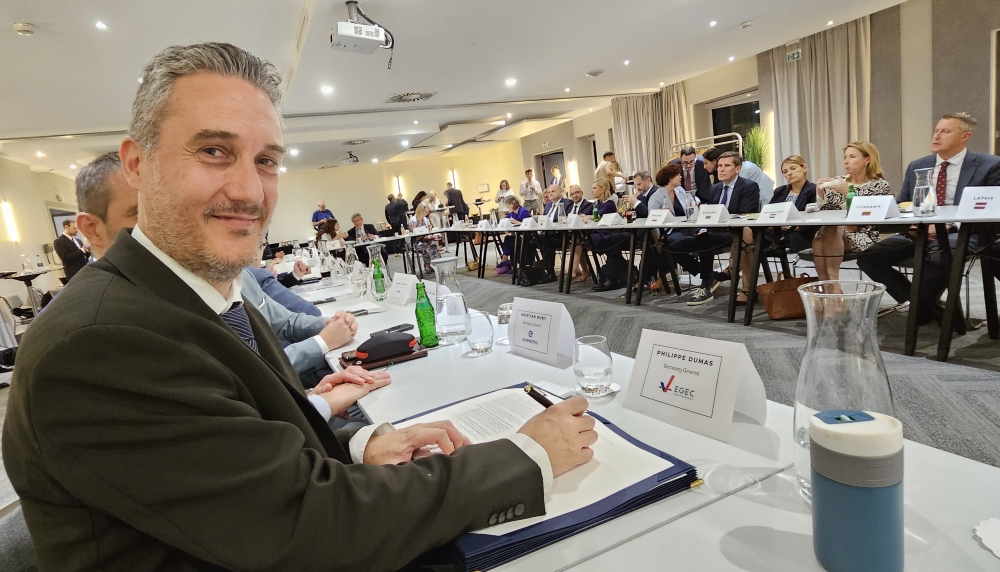
The EU’s Energy Commissioner Dan Jørgensen chaired the signing ceremony, which took place in Luxembourg on Friday (26 June). EGEC was represented by our Secretary General, Philippe Dumas. Also present were the CEOs of two EGEC members: Erika Salmenvaara from QHeat and Ernst Gostner from Fri-El Green Power SpA.
According to Philippe Dumas: “Signing this Tripartite Agreement on energy storage is a proud moment for EGEC. The agreement brings together key players including storage solution providers, power and heat producers, energy consuming industries and the district heating and cooling sector, plus the banks who have a key role to play in financing energy storage projects. With the strong backing and commitment from the European Commission and national governments, we are optimistic that this agreement will provide a platform for accelerating the deployment of underground thermal energy storage across the whole of the EU, as well as the supply of geothermal lithium for batteries. In this way we can continue to show how all kinds of geothermal storage solutions can contribute to achieving a more resilient, efficient and sustainable energy system.”
For more info see the European Commission’s Press Release.
Philippe Dumas at the signing ceremony in Luxembourg on 26 June 2026.
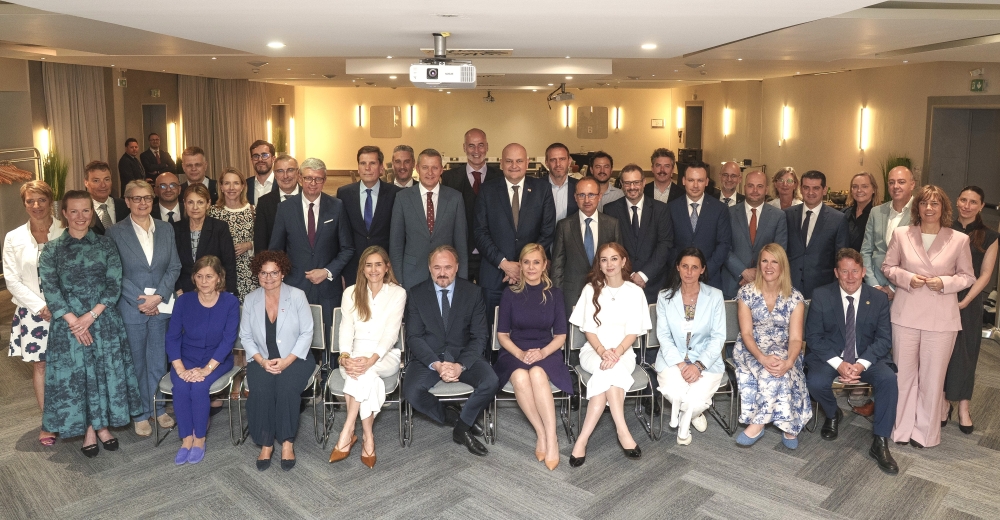
Signatories of the Tripartite Agreement on Energy Storage (© European Union 2026)

BE SOCIAL & SHARE