

Following on from the European Union’s commitments to phase out energy imports from Russia, make energy affordable, boost industrial competitiveness, improve energy security and reduce greenhouse gas emissions, the European Geothermal Energy Council (EGEC) insists that the European Commission must present an investment-orientated strategy and action plan to accelerate the deployment of all geothermal energy solutions. EGEC calls on the European Commission to publish a dedicated European Geothermal Strategy and Action Plan in the first quarter of 2026. This echoes requests made by EU Energy Ministers (see the TTE Council Conclusions of 16 December 2024) and also by the European Parliament (Resolution on geothermal energy, adopted on 18 January 2024). Indeed, the European Commissioner for Energy and Housing, Dan Jørgensen, has already confirmed (on 14 March 2025) that the Commission will present "an action plan on geothermal energy" before the end of March 2026. According to EGEC, the Commission’s proposal must include the following elements: An EU-wide target to reach 250 GW of geothermal capacity by 2040 covering all technologies. This will build on the 44 GW of installed capacity in the EU. A European Geothermal Charter, which codifies the 2040 target and launches the Geothermal Industrial Alliance to manage its delivery. Targeted European financial instruments to leverage private capital. Measures to make permitting processes more efficient and faster, as well as improving access to geological data. Sectoral or tripartite agreements with key energy consumers. Peer-to-peer guidance to help governments develop national and regional roadmaps to remove barriers, accelerate investments and build local supply chains. European instruments to support value chain development in local manufacturing and skilled professionals. The inclusion of geothermal energy as a central pillar of the EU’s Global Gateway and the Global Energy Transition Forum. Improvements to the collection and presentation of market data and statistics to enable better energy modelling. EGEC’s proposals are set out in a new policy document:The European Geothermal Strategy and Action Plan - Making Europe competitive, secure and affordable Watch EGEC's webinar on the launch of its recommendations for the EU Geothermal Strategy and Action Plan: https://www.youtube.com/watch?v=pxUUaWHfuM8
Download the full European and National reports
The behaviours and attitudes of European consumers towards the heating, cooling, and hot water systems they use have been analysed in a study of more than 5500 participants representing private households, tertiary buildings, and industry.
 The study examined why current systems are used, where users get information about thermal energy, why they choose some systems rather than others, how they perceive different sources of energy, and their sensitivity to price changes. The research was conducted by a consortium of public authorities and renewable energy groups as part of the FROnT project.
The research was conducted in order to provide public authorities and businesses with information about how to effectively communicate with their audiences about the energy choices they make, and to better understand how a shift to renewables can be achieved.
Some clear trends were found from the data collected in the Netherlands, Poland, Portugal, Spain, and the United Kingdom. For all sectors, professionals are the main source of information but private users also rely heavily on the advice of their relatives. Total economic savings is one of the most important factors when choosing a system; it’s the most important factor for the residential sector and the second most important for others, coming just behind reliability.
The residential sector is the least aware of renewables and the tertiary the most aware, but the industrial sector is the most willing to pay for Renewable Heating and cooling. In general, consumers think that renewables have high investment costs but deliver high economic savings. It is the need for an initial investment that stops most people installing renewables. Most people are largely satisfied with their existing systems, but are unhappy about fuel prices.
[caption id="attachment_7736" align="alignright" width="282"]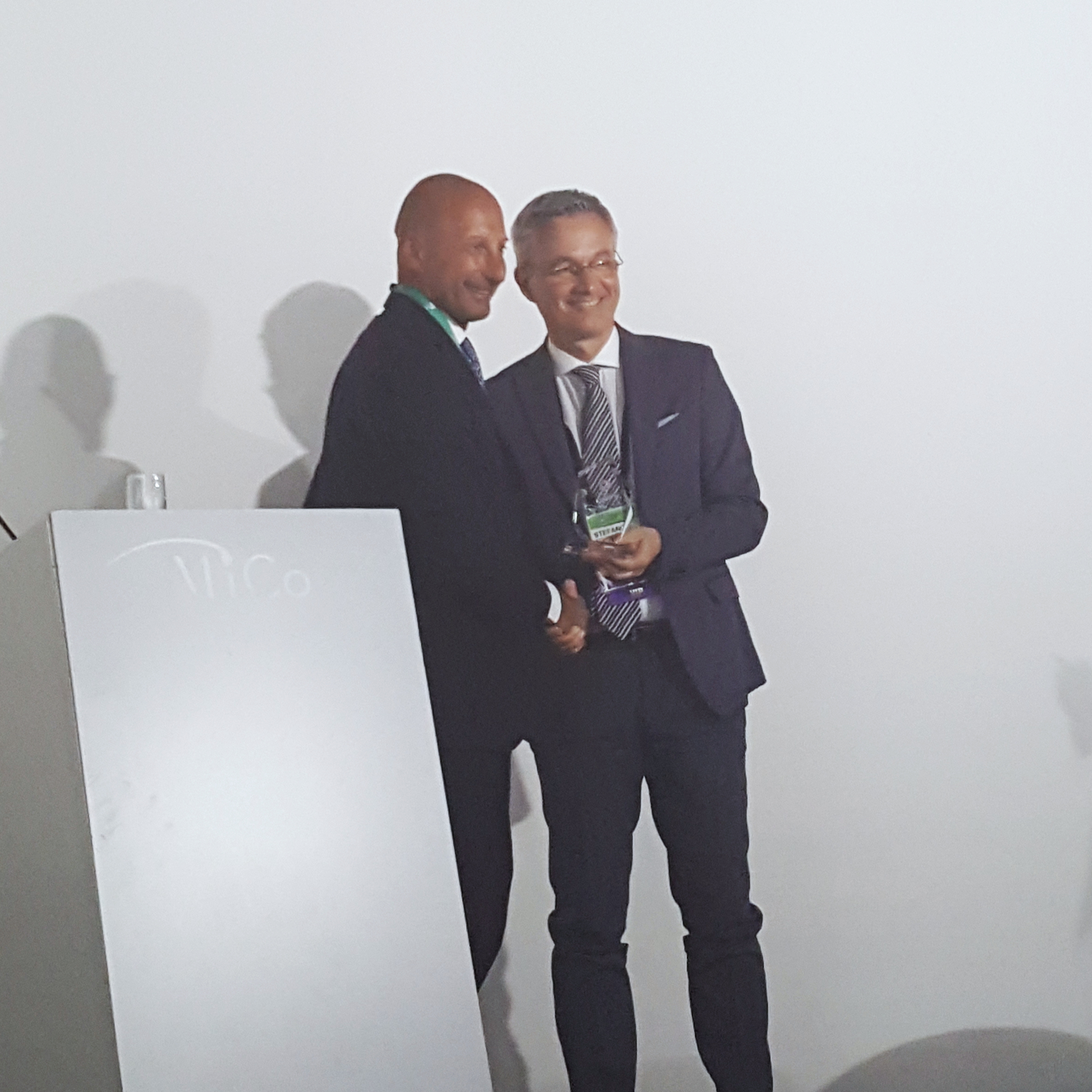 Paolo Bertuzzi, Turboden CEO (left), and Senator Stefano Vaccari, Italy (right)[/caption]
COGEN, the European association for the promotion of cogeneration, has given its Recognition Award 2016 (Technology and innovation category) to Turboden.
With more than 35 years of experience in ORC turbogenerators, Turboden has designed, manufactured, and delivered more than 320 turbogenerators worldwide, of which more than 250 are cogenerative. The Italian company has produced and commissioned three combined heat and power geothermal units; one in Austria (Altheim) and two in Germany (Bavaria), with a total installed capacity of 10 MWe electric. A further 4.2 MW geothermal power plant in Croatia is currently under construction.
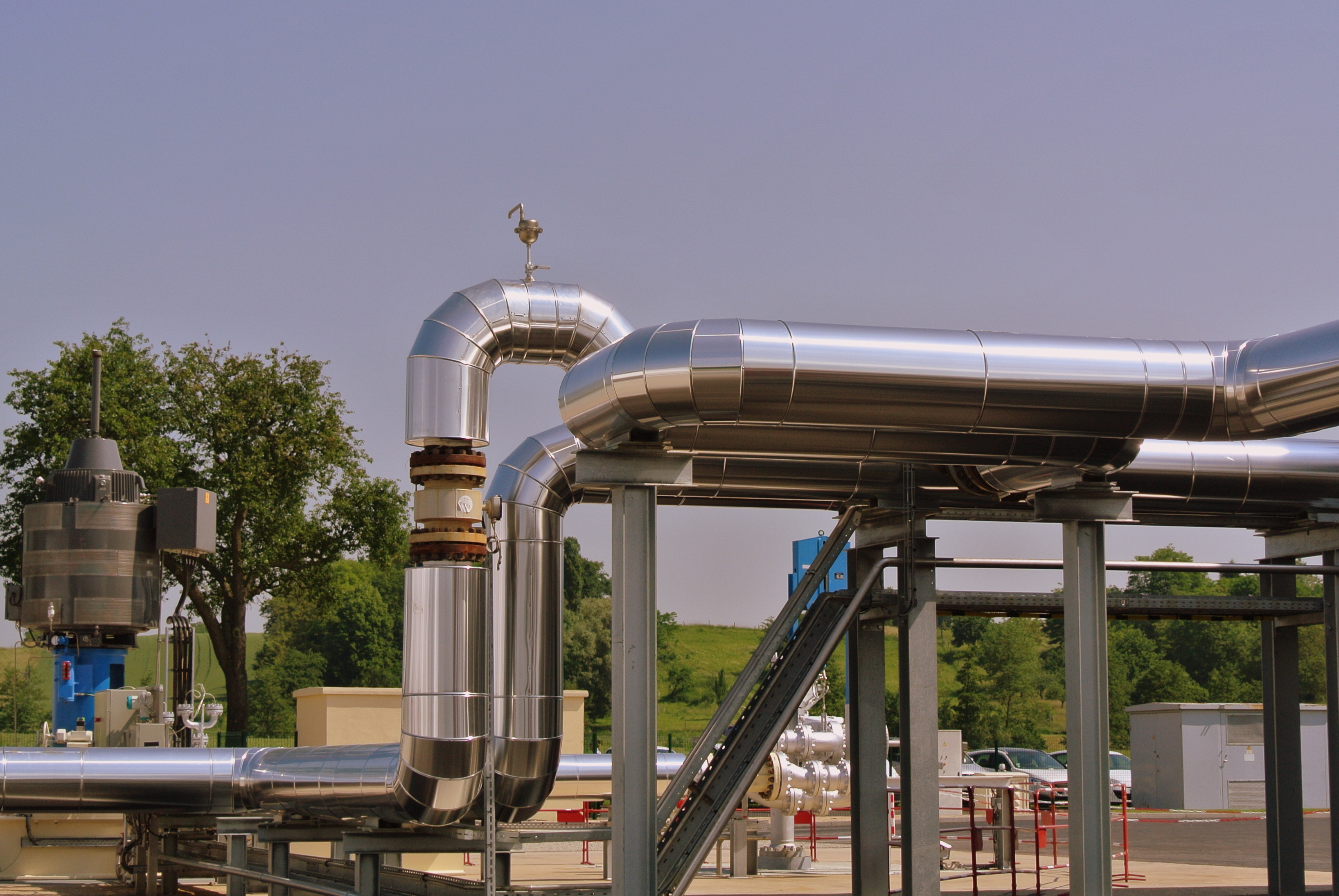 A revolutionary geothermal heat plant in Ritterschoffen, France, was inaugurated On 7th June in France by Électricité de Strasbourg, Roquette, and Caisse des Dépôts.
The plant uses geothermal fluid at 165°C extracted at depths of 2,500m to deliver heat for industrial processes to a factory 15km away. With an annual production of 24MWth, it will save the emissions of 39,000 tonnes of CO2 from the factory.
A world first and a model for the energy transition, the plant is an important step towards the wider development of Enhanced Geothermal Systems, which allows deep geothermal to be exploited in new areas. Together with the ground breaking EGS power project in nearby Soulz-sous-forest, it demonstrates that deep geothermal energy can be developed almost anywhere powering and heating a cleaner, more sustainable Europe.
Investment for the €55 million plant came principally from ADEME and the regional authorities.
Segolene Royale, French minister for the environment, energy, and the sea officially opened the plant. She highlighted the importance of the collaboration between Caisse des depots,
Following the public consultation on 'Planning and reporting obligations as part of the Energy Union Governance’, EGEC and ten other RES associations express their views on Member States' planning and reporting obligations.
EGEC, together with twelve other renewable energy associations, believe that, in order to maintain global leadership in renewables, "Europe should now make a firm and resolute commitment to a flourishing and vibrant domestic renewable energy market. This is why we call on the European Commission to model an appropriate range of policy scenarios this year, which should include renewable energy targets of at least 30%, 35% and 40% by the year 2030."
You can download our full position here
For more information, read the EGEC priorities for a revised Renewable Energy Directive here and for the heating and cooling sector here.
EGEC responded to the public consultation on Streamlining of planning and reporting obligations as part of the Energy Union Governance. EGEC welcomes the development of a new Energy Union governance system based on integrated national plans and reports adressing the different streams of the EU energy and climate policy. Such development paves the way to a more holistic approach and may facilitate the exploitation of the many synergies between the various dimension of the Energy Union.
For more information about our position, please read the executive summary of the EGEC response.
You can also view the full response to the consultation here.
As 150 countries sign the Paris agreement today in New York, a collation of renewable energy associations, businesses, cities, trade unions, and civil society groups join together to urge European leaders to take action on climate change, ensuring the agreements made at the COP21 are in harmony with EU climate targets.
| We represent businesses, trade unions, local authorities and civil society organisations supporting a wide range of social and environmental outcomes. We have come together in an unprecedented grouping, to recognise that the Agreement struck in Paris in December 2015 is a turning point that requires the world to step up and raise its ambition to keep global temperature rise well below 2 degrees, as well as to pursue efforts towards 1.5 degrees. | 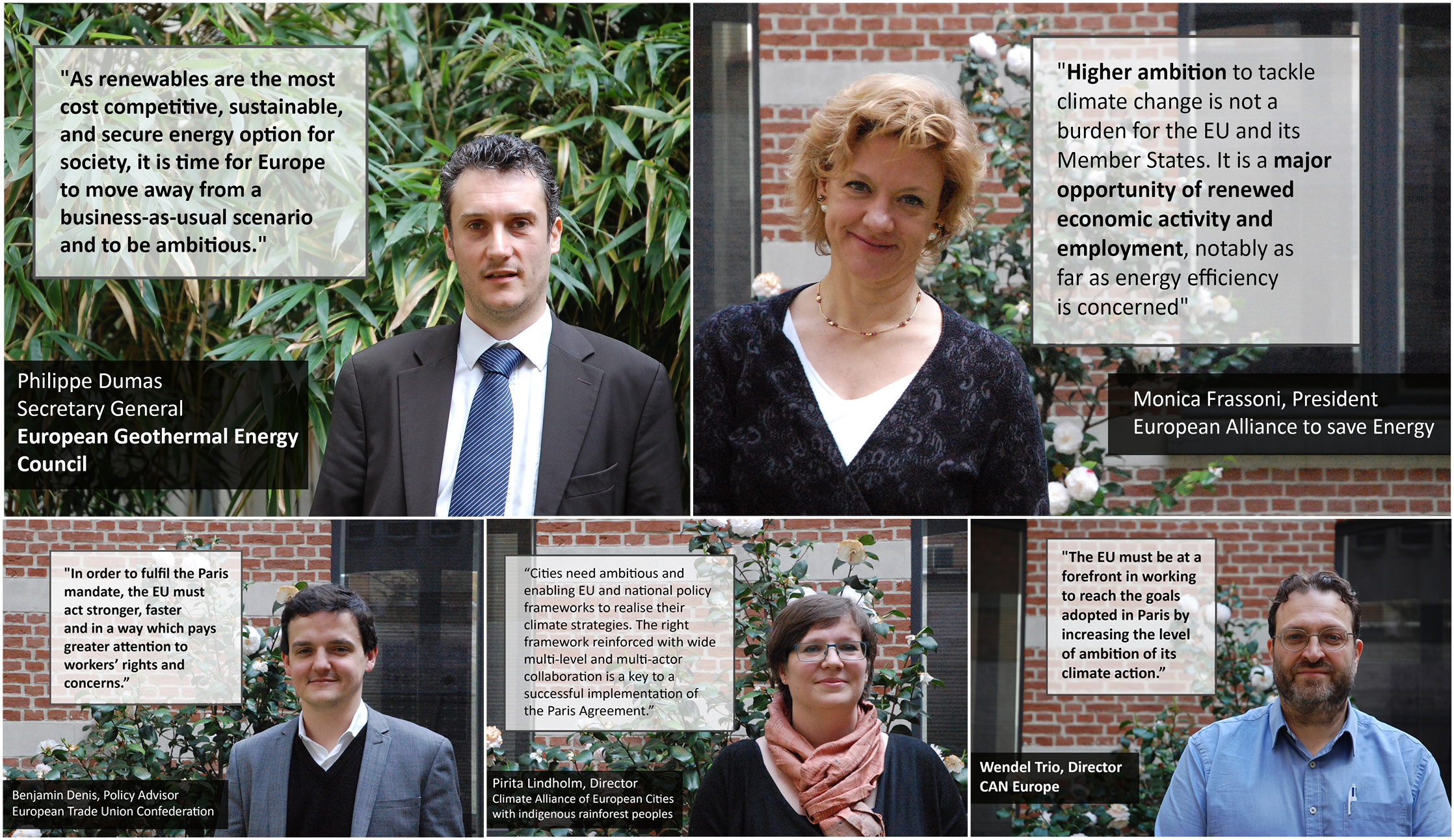 |
| European leadership helped deliver the Paris Agreement. As you set off to New York to Sign this agreement, we ask you to continue to show leadership by delivering ratification of the Paris agreement as soon as possible, and by working with the other countries to support their delivery of the agreement’s goals and obligations, thereby effecting enhanced climate diplomacy Download the full statement (PDF) | |
The knowRES project has released two reports assessing the current status of employment in the Geothermal sector and forecasting future trends.
The Geothermal Sector report found that:
| This week more than fifty experts from all over Europe met in Brussels to begin the process of creating a European Technology and Innovation platform for deep geothermal. During the meeting, the draft terms of reference were discussed and the members of the provisional steering committee were selected. They will now work to finalise these terms of reference. | |
| The chair is Ruggero Bertani (ENEL GP) The Vice Chairs are Marco Baresi (Turboden) and Jan Diederick VanWees (TNO) |  |